
Fiber and tube laser cutting machines in South Africa: import duty, VAT, power and service
To buy a fiber laser cutting machine in South Africa, check import tax, power quality, port route and local service before you compare prices.
SARS lists laser machine tools (heading 8456.11) as free of customs duty, and 15 % VAT applies. Halcyon Laser is an exporter and has no service office in South Africa yet.
Laser cutting machine in South Africa: import from China or buy through a local agent
Buyers of a fiber laser cutting machine in South Africa usually choose between a local agent or distributor that holds stock and service staff, and a direct purchase from an exporter such as Halcyon Laser. The US Commercial Service says each industry sector has a limited number of major distributors, that capital equipment is often handled by distributors who carry a wide range of spare parts, and that for technical products it is advisable to appoint a dedicated after-sales agent in the country (source 1). We do not rank suppliers. Put the same questions to every one of them and get the answers in writing.
| Question | Local agent or distributor | Direct from Halcyon Laser (exporter) |
|---|---|---|
| Where is the machine now? | Ask whether this exact machine is already in South Africa, for its serial number and for the date it can leave. | It ships from China after you order. The delivery plan and shipping route are written into the quotation; we publish no lead time on this site. |
| Who is the importer? | Ask whether the agent imports and clears the machine, and what you pay for that. | Customs South Africa requires an importer to register with SARS and obtain an importer’s code (source 2). Decide before you order who the importer of record is: you, a clearing agent or another named company. |
| Who clears it at the port? | Ask for the import papers of this unit. | The US guide lists a commercial invoice (four copies and an original), a bill of lading, a packing list, and an insurance certificate for sea freight, and says SARS uses a Single Administrative Document (SAD) for clearance (source 2). The documents we can supply are listed in the quotation. |
| Who installs it and trains operators? | Ask where the technician is based and for a response time in writing. | Installation and operator training are part of our plan; visit dates and who attends are confirmed in the quotation. We have no local office. |
| Who holds spare parts? | Ask for the list of parts held in South Africa. | A starter kit comes with the machine. Other parts ship from outside South Africa, so agree a list of critical spares to hold at your site. |
| Who gives the warranty? | Ask whether the agent, the maker or both stand behind it, and get it named. | Warranty and service terms are agreed order by order and written into your contract. |
| Can I see my own part cut first? | Ask the agent to cut it on a machine in South Africa. | Send a drawing through the test cut page. We tell you whether a test cut can be arranged. |
The same US guide says that in most cases after-sales service should be available locally, because delays often lead purchasers to look for other suppliers (source 1). That is a fair test for any supplier, including us. We have no service office in South Africa today, and the service section below says what we can and cannot offer.
Laser cutting machine in Johannesburg, Durban and Cape Town: what changes by city
The three big centres differ in climate and in how cargo reaches them. The public facts below help you plan. None of them replaces a visit to your site and a call to your forwarder and your electricity provider.
| City | Warmest month, mean daily maximum | Port or inland route | Plan for |
|---|---|---|---|
| Johannesburg (Gauteng) | 25.6 °C in January (source 3) | Inland. The US guide calls Johannesburg the major distribution point, with bonded inland port status for customs and excise purposes (source 1). Your forwarder chooses the entry port and the road or rail leg. | Power capacity at your plot; chiller room |
| Durban (KwaZulu-Natal) | 28.0 °C in February (source 4); about 15 rain days in January | Durban Container Terminal. The US guide calls Durban the busiest ocean port in Africa and says containers handled there are 64 percent of all containers at South African ports (source 1). | Rain and condensation near the coast: ask how the chiller handles the dew point |
| Cape Town (Western Cape) | 26.5 °C in February (source 5); 12 to 14 rain days a month from June to August | Cape Town Container Terminal. The guide describes the Gqeberha Container Terminal as one of three specialised container-handling facilities on the coast (source 1). | Wet winters: protect electrics and consumables in storage |
Mean daily maximum temperature of the warmest month and average rain days per month, 1961–1990, published by the WMO World Weather Information Service with data supplied by the South African Weather Service.
Ports. The US guide says Durban, Cape Town and Gqeberha handle most imports (source 1). It also says congested and inefficient ports have caused delays in cargo handling and higher costs, and that the government has set up a National Logistics Crisis Committee to deal with freight problems (source 6). We name no transit time or port fee here; your forwarder quotes them for your shipment.
Tube lasers. A tube laser cutting machine follows the same import steps as a flat-sheet machine. See our tube laser cutting machine and plate-and-tube machine, and ask your broker to confirm the tariff heading for the exact configuration.
Cutting services. If you want someone to cut parts for you, note that we sell machines and do not run a cutting workshop or offer cutting services.
Power supply and load shedding: what to check before a 20–40 kW machine
Eskom describes its low-voltage network as normally supplying at 400/230 volts three-phase or 230 volts single-phase (source 7). Its standard conditions of supply state a frequency of 50 hertz and say Eskom will endeavour to maintain supply quality, subject to the deviations allowed by the NRS 048-2 standard (source 8). That is the same 50 Hz as in China, where our machines are made, but the voltage your plot actually receives, its capacity and its phase balance still need checking. Your supply agreement states the declared voltage. Write it into the order, and see our power requirements guide.
Where load shedding stands. On 13 March 2026 Eskom said South Africa had reached 300 consecutive days without load shedding, with only 26 hours of load shedding recorded in April and May 2025 (source 9). On 22 April 2026 SAnews reported Eskom’s projection of no load shedding from 1 April to 31 August 2026 (source 10). Eskom separately applies “load reduction”, a targeted measure to protect the network in areas where illegal connections and tampering put it at risk, and says it plans to eliminate it by 2027 (sources 9, 10). We did not find an Eskom outlook for the 2026/27 summer. Check Eskom’s latest statement, and ask your own supplier of electricity about your feeder, before you plan.
Why it still matters. Eskom’s own fact sheet says voltage sags, surges and interruptions can cause equipment failure or damage, system lock-up and data loss, and it tells facility owners to find out about supply quality before committing to equipment (source 11). Eskom’s standard conditions for small supplies say it is not liable for damage from interruption or from variation of voltage or frequency unless it was negligent, and that even then its liability is limited to direct damages, excluding consequential damages such as loss of production (source 8). Those are the terms for small supplies. A large industrial supply has its own agreement, which we have not read. Read yours.
- Ask for the machine’s tolerance in writing. One maker publishes site requirements for its flatbed lasers of up to 6 kW: line voltage fluctuation under 5 %, three-phase unbalance under 2.5 %, a stabilised supply, and no compressor or fan on the machine’s supply (source 12). That is one maker’s rule for smaller machines, not a rule for yours. Ask your supplier for the voltage tolerance, phase balance and behaviour on loss and return of power of the exact model.
- Size any stabiliser, UPS or generator on the real connected load. AccTek says a 12kW machine draws roughly 58–60 kW in total and a 30kW machine roughly 132–133 kW, including the chiller (sources 13, 14). Ask for the connected load of your model. Our articles on the 12kW and 30kW machines show both sets of figures.
- Have the installation certified. The Electrical Installation Regulations, 2009 require the user or lessor of an electrical installation to hold a valid certificate of compliance, issued by a registered person (regulation 7), and the Department of Labour’s notes define “installation work” to include connecting machinery at its supply terminals (source 15). We read that as covering the machine connection; confirm with your electrician.
Heat, humidity and dust: cooling is part of the machine
One chiller manufacturer advises keeping fiber laser chillers in well-ventilated spaces below 40 °C ambient (source 16). The warmest-month means in the table above are outdoor air temperatures and sit well below that figure. A closed hall with a laser source and chiller running can be warmer than the air outside, so measure the planned location on a hot afternoon rather than relying on the forecast. Ask for the chiller’s rated ambient temperature and capacity in writing, and read our chiller maintenance guide.
Standards and approvals: what we found for a laser cutting machine
We did not find a mandatory NRCS or SABS certification requirement for laser cutting machines. Confirm with your clearing agent before you order. This is what we did find:
- SABS and NRCS in general. The US guide says only 53 of the roughly 5,000 SABS standards are mandatory, but that other standards, electricity standards for example, may be treated as compulsory depending on the law, which creates uncertainty for businesses. It also says electrical products need electromagnetic interference certification, that labelling for industrial imports must be in English, and that foreign suppliers have found applications for Letters of Authority slow (source 17).
- NRCS specification VC 8055. It covers the safety of electric and electronic apparatus with rated voltages up to 600 V AC or DC, “includes, but not limited to” household apparatus, audio, video and communication equipment, test, measurement, control and laboratory apparatus, transformers and power supplies, UPS systems and photovoltaic power converters. Approval is a Letter of Authority from the NRCS, and the applicant must be a legal entity in South Africa (source 18). The 2017 notice we read does not name industrial machine tools, and as a notice of intent its text may have changed. Because the scope is open-ended and a machine on a 400 V supply is below 600 V, we cannot rule VC 8055 in or out for the machine, its UPS or its power supplies. Ask the NRCS or your agent in writing.
- Workplace machinery. The Driven Machinery Regulations, 2015 apply to the design, manufacture, operation, repair, modification, maintenance, inspection, testing and commissioning of driven machinery (source 19). The text we read does not mention lasers or importers. Ask your safety adviser which parts apply to the laser, the loader and the chiller.
We make no CE, SABS or NRCS conformity claim on this site. Which documents come with your machine is confirmed per machine, in the quotation. This is our reading of public texts, not legal advice.
Import duty, VAT and what the landed cost is made of
Customs duty. The SARS customs tariff, Schedule 1 Part 1, in the version dated 16 October 2026, lists heading 8456.11, machine-tools for working any material by removal of material by laser (“Operated by laser”), with a general rate of duty of free. The trade-agreement columns for the EU and UK, EFTA, SADC, MERCOSUR and AfCFTA also show free (source 20). This is the ordinary customs duty only. We expect flat-sheet and tube laser cutters to sit under this heading, but your broker sets the code for your exact configuration. The US guide says SARS enforces approximately 90,000 tariff codes strictly and encourages new exporters to use a reputable clearing agent (source 2).
VAT. The US guide gives the VAT rate as 15 percent (source 21). SARS says the base for import VAT is the customs value, plus any duty, plus 10 percent of the customs value, and that goods originating in and imported from Botswana, Lesotho, Eswatini or Namibia do not take the 10 percent uplift (source 22). With a duty of free, the arithmetic on a round number looks like this:
| Step | Amount |
|---|---|
| Customs value (a round number) | 100 |
| Plus 10 % of the customs value | 10 |
| Plus customs duty at the general rate for 8456.11 (free) | 0 |
| Base for VAT | 110 |
| VAT at 15 % of the base | 16.5 |
Arithmetic from the SARS rule using a round number, not a quote for any machine; VAT is then 16.5 % of the customs value. The US guide says the customs value is the f.o.b. transaction value in the exporting country (source 21). Freight, insurance and local costs are separate. Check the calculation with your broker.
Other costs. Sea freight, insurance, port and clearing charges, inland transport, foundation, electrical work and installation are separate from duty and VAT. Ask your forwarder for a landed-cost quotation to your site.
Used machines. The US guide says import permits from ITAC are still needed for most used or second-hand items (source 2). If you are considering a used laser, read our guide to importing into South Africa, Nigeria and Kenya and ask ITAC before you pay.
Price. We did not find a public South African price list for new fiber laser cutting machines, and we publish no Halcyon Laser price. Published ranges by power class from other sellers are in our price guide and on the 30kW capacity page. Add the VAT mechanics above, freight and local costs to compare them with a local quotation. Our import duty article covers other countries.
Paying for the machine: what the Reserve Bank manual says
Foreign currency payments for imports go through an authorised dealer, which means your bank. The South African Reserve Bank’s Currency and Exchanges Manual for Authorised Dealers (version dated 8 October 2026), section B.1, says dealers must advise importers to make sure an ITAC import permit is available or not required, and may make payments against the supplier’s commercial invoice, a transport document or forwarder’s certificate, and the consignee’s copy of the SARS customs declaration. For advance payments, a dealer may provide foreign currency for permissible imports other than capital goods against an invoice, and must later view the customs declaration for payments above R100,000 (source 23).
- Capital goods. The manual allows advance payments of up to 100 percent of the supplier’s cost of capital goods, before freight and insurance, up to a total of R10 million. Above R10 million, advance payment is allowed only up to 50 percent of that cost, unless the client confirms to the dealer that the order would otherwise be refused and that such payment is normal in the trade (source 23). Ask your bank in writing whether it treats the machine as capital goods.
- Long credit. Documentary credits, standby letters of credit or open-account terms that give the local importer more than 12 months need prior written approval from the Financial Surveillance Department (source 23).
Our payment terms are agreed order by order and written into the contract; we publish none here. Confirm any change of bank account by phone, on a number you already know. Our article on financing a laser cutting machine covers other routes.
Before you order: a short checklist
| Check | Why it matters | Who confirms |
|---|---|---|
| Voltage and supply capacity | Eskom’s normal low-voltage supply is 400/230 V three-phase, 50 Hz; your agreement states the declared voltage (sources 7, 8) | Electrician, your electricity supplier |
| Power quality | Eskom: sags, surges and interruptions can damage equipment; ask for the model’s tolerance and connected load (source 11) | Supplier, in writing |
| Electrical certificate | Valid certificate of compliance for the installation (source 15) | Registered person |
| Approvals | No mandatory NRCS or SABS requirement for laser cutters found; VC 8055 scope is open-ended (sources 17, 18) | NRCS, clearing agent, in writing |
| Tariff code, duty and VAT | 8456.11 shows free; VAT 15 % on a base with a 10 % uplift (sources 20, 22) | Clearing agent |
| Importer and papers | SARS importer’s code; invoice, bill of lading, packing list, insurance certificate (source 2) | Importer, freight forwarder |
| Payment route | Through an authorised dealer; advance-payment limits for capital goods (source 23) | Your bank |
| Chiller rating | Advice is below 40 °C ambient (source 16); confirm capacity at your site | Supplier, in writing |
| Assist gas | Local nitrogen supply, or air cutting | Gas supplier, buyer |
| Service plan | No local office yet: agree spares and response times | Buyer, Halcyon Laser |
Service: what we can and cannot offer today
We do not yet have a service office or spare-parts warehouse in South Africa. We would rather say so now than have you find out after a breakdown. Here is what support looks like today, and what to agree in writing:
- Before shipping: an acceptance test with test cuts and a video report.
- Installation and training: included in the plan, with the visit dates and who attends confirmed in the quotation. See Service & Support.
- Remote diagnostics: every machine has a remote diagnostics router, so your site needs a stable internet connection.
- Spare parts: a starter kit comes with the machine. Agree a list of critical parts to hold at your site, because they will ship from outside the country.
- On-site visits after installation: ask for the response time in writing, and how visas and travel are handled.
If a same-day local technician is a must for your plant, tell us early, and weigh that against a supplier with a local team. Our guide to comparing after-sales service lists the questions to ask any supplier.
Frequently asked questions
Can I buy a fiber laser cutting machine in South Africa from you?
Yes, but we quote and ship from China: we have no office, stock or showroom in South Africa. Delivery and installation terms go in the quotation. If you need to see a machine first, ask local agents, and ask us for a test cut on your part.
What is the import duty on a laser cutting machine in South Africa?
The SARS tariff, in the version dated 16 October 2026, lists heading 8456.11 (machine-tools operated by laser) with a general duty rate of free. VAT of 15 % still applies, on a base that includes a 10 % uplift. Your clearing agent confirms the code for your exact machine.
How is import VAT calculated in South Africa?
SARS takes the customs value, adds any duty and 10 % of the customs value, and applies 15 % to that total. On a round customs value of 100 with no duty, VAT is 16.5. Goods from Botswana, Lesotho, Eswatini and Namibia skip the 10 % uplift.
Do I need NRCS or SABS approval for a laser cutting machine?
We did not find a mandatory NRCS or SABS certification requirement for laser cutting machines. The NRCS specification for electrical apparatus, VC 8055, has an open-ended scope, so ask the NRCS or your clearing agent in writing before you order.
Does load shedding affect a laser cutting machine?
Eskom reported 300 days without load shedding to 12 March 2026, but it still applies load reduction in some areas, and says sags and surges can damage equipment. Ask your supplier for the model’s voltage tolerance and size any stabiliser or backup on the connected load.
Which port is used to ship a laser cutting machine to South Africa?
Durban, Cape Town and Gqeberha handle most imports; the US guide says Durban handles 64 percent of containers at South African ports. Johannesburg has bonded inland port status. Your forwarder confirms the route. We publish no transit time.
How much does a fiber laser cutting machine cost in South Africa?
We did not find a public South African price list for new fiber laser cutters, and we publish no Halcyon Laser price. Published ranges by power class are in our price guide. Add 15 % VAT on the SARS base, freight, clearing and local costs.
Can I pay in advance for a machine imported into South Africa?
The Reserve Bank manual allows advance payments for capital goods of up to 100 % of the supplier’s cost up to R10 million, and up to 50 % above that, in the cases it describes. Your bank decides, so ask it in writing.
Do you have a service team in South Africa?
Not yet. We have no local office or parts warehouse. Support today is remote diagnostics, a starter spare-parts kit, and on-site visits agreed in the quotation.
Can I see my own part cut before ordering?
Send a drawing through the test cut page. We tell you whether a test cut can be arranged. If it can, you receive a video and edge photos.
Sources
- US International Trade Administration, South Africa Distribution and Sales Channels (last published 30 June 2026) — www.trade.gov (accessed 2026-11-03)
- US International Trade Administration, South Africa Import Requirements and Documentation (last published 30 June 2026) — www.trade.gov (accessed 2026-11-03)
- World Meteorological Organization, World Weather Information Service, Johannesburg climatological information (1961–1990; data supplied by the South African Weather Service) — worldweather.wmo.int (accessed 2026-11-03)
- World Meteorological Organization, World Weather Information Service, Durban climatological information (1961–1990; data supplied by the South African Weather Service) — worldweather.wmo.int (accessed 2026-11-03)
- World Meteorological Organization, World Weather Information Service, Cape Town climatological information (1961–1990; data supplied by the South African Weather Service) — worldweather.wmo.int (accessed 2026-11-03)
- US International Trade Administration, South Africa Market Challenges (last published 30 June 2026) — www.trade.gov (accessed 2026-11-03)
- Eskom, brochure “Connection charges for customers connected to the Distribution network” (June 2016): a low-voltage network is “normally supplying at 400/230 volts three-phase or 230 volts single-phase” — www.eskom.co.za (accessed 2026-11-03)
- Eskom, Standard conditions of supply for small supplies with conventional metering, annexure (Rev June 2015): frequency of 50 hertz, deviations as specified in NRS 048-2, and limits on Eskom’s liability — www.eskom.co.za (accessed 2026-11-03)
- Eskom, “Eskom marks 300 days without loadshedding”, media statement of 13 March 2026, published on the South African Government site — www.gov.za (accessed 2026-11-03)
- SAnews (South African Government News Agency), “Load shedding free winter on the cards for SA”, 22 April 2026 — www.sanews.gov.za (accessed 2026-11-03)
- Eskom, fact sheet “Quality of supply: the means to safe, reliable and sustainable operations” (undated): sags, surges and interruptions and their effects on equipment — www.eskom.co.za (accessed 2026-11-03)
- Full Spectrum Laser, “Fiber Flatbed Site Requirements” for its Atlas Fiber Flatbed machines (laser power up to 6,000 W), updated 11 August 2023: one maker’s published site requirements — fslaser.com (accessed 2026-11-03)
- AccTek Group (laser cutting machine builder), “12kW Laser Cutting Machines”: power consumption section, page undated — www.acctekgroup.com (accessed 2026-11-03)
- AccTek Group, “30kW Laser Cutting Machines”: power consumption section, page undated — www.acctekgroup.com (accessed 2026-11-03)
- Department of Labour, “Explanatory notes on the Electrical Installation Regulations, 2009”, Government Gazette No. 35180, 26 March 2012: regulation 7 (certificate of compliance) and the definition of installation work — www.gov.za (accessed 2026-11-03)
- S&A Teyu, advice on chiller room temperature for fiber lasers (chiller manufacturer) — www.teyuchiller.com (accessed 2026-11-02)
- US International Trade Administration, South Africa Standards for Trade (last published 30 June 2026) — www.trade.gov (accessed 2026-11-03)
- Government Gazette No. 40860, 26 May 2017: NRCS notice of intent to amend the Compulsory Specification for Electric and Electronic Apparatus (VC 8055), clause 1 (scope) and clause 2.1 (definitions); the current text may differ — www.gov.za (accessed 2026-11-03)
- Department of Labour, Driven Machinery Regulations, 2015, Government Gazette No. 38887, 19 June 2015: regulation 2 (scope of application) — www.gov.za (accessed 2026-11-03)
- South African Revenue Service, Customs and Excise Tariff, Schedule 1 Part 1 (customs duty), version dated 2026-10-16: heading 84.56, subheading 8456.11 and the rate columns — www.sars.gov.za (accessed 2026-11-03)
- US International Trade Administration, South Africa Import Tariffs (last published 30 June 2026) — www.trade.gov (accessed 2026-11-03)
- South African Revenue Service, “FAQ: How is VAT calculated on imported goods?” (page last updated 29 April 2025) — www.sars.gov.za (accessed 2026-11-03)
- South African Reserve Bank, Currency and Exchanges Manual for Authorised Dealers (version dated 2026-10-08), section B.1 Payment for imports — www.resbank.co.za (accessed 2026-11-03)
Machines for South Africa fabricators
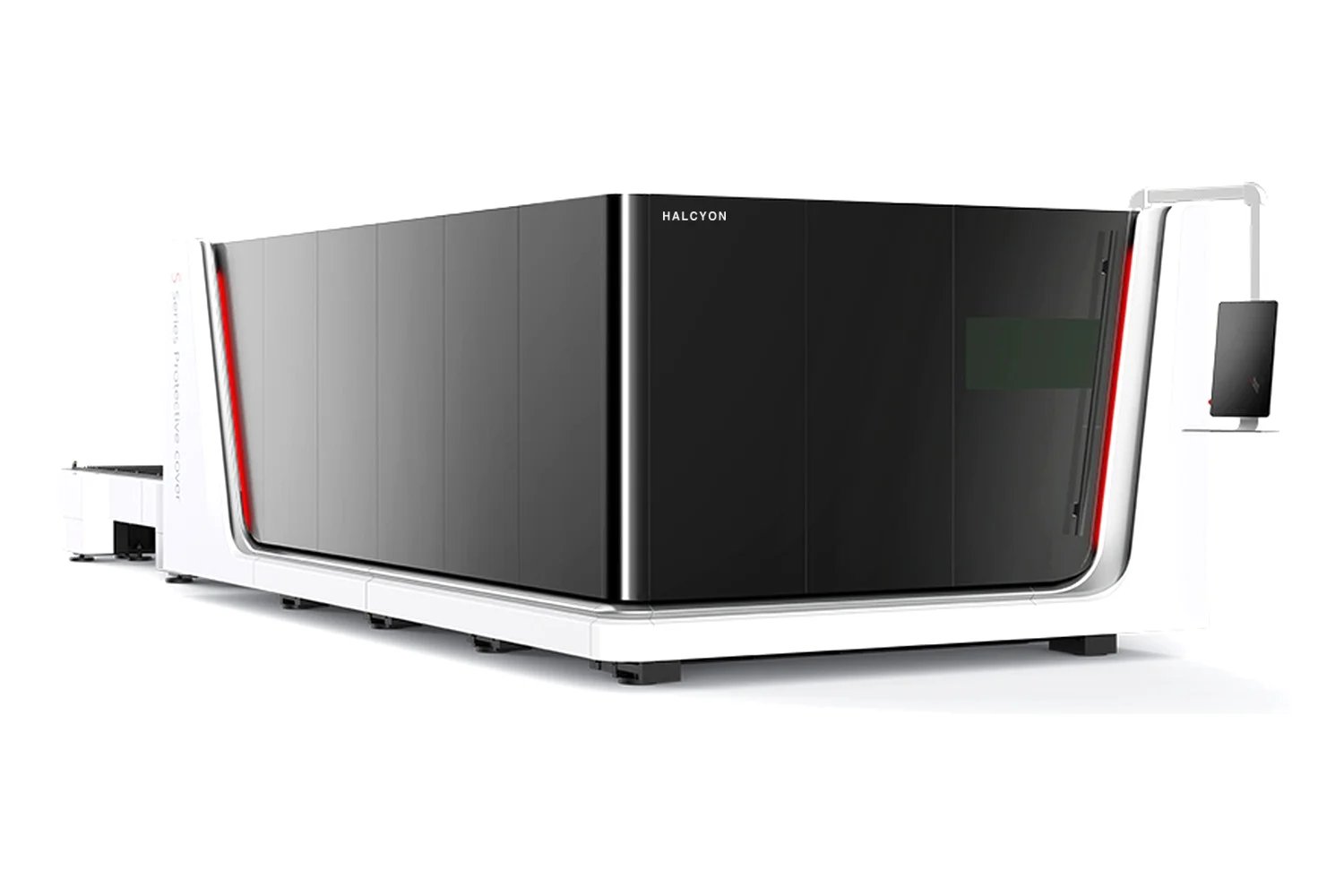
HL-F Series High-Power Fiber Laser Cutting Machine (20–40 kW)
20, 30 and 40 kW enclosed flatbed cutters with exchange table, built for thick plate and high-volume thin sheet.
Read more →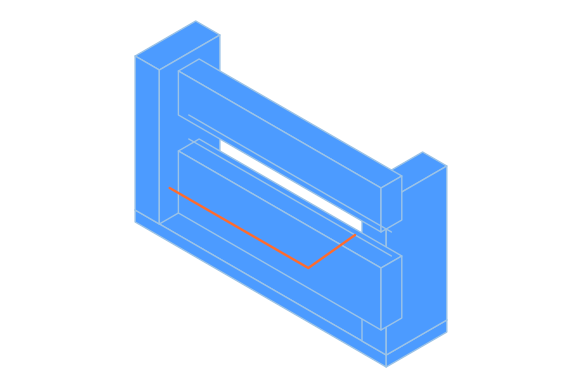
HB Series CNC Press Brakes
Electro-hydraulic servo, all-electric servo, hybrid, heavy-duty and tandem CNC press brakes.
Read more →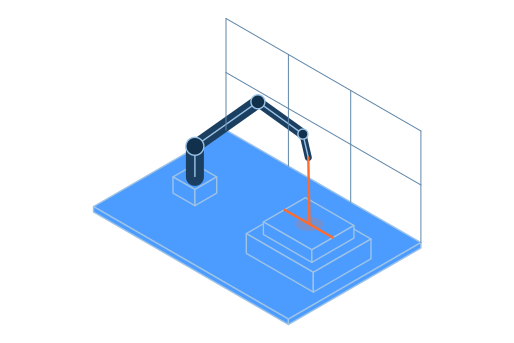
HL-RW Robotic Laser Welding System
Six-axis robot cells with fiber laser welding heads and seam tracking for consistent, low-distortion welds.
Read more →Planning a machine for South Africa?
Send your parts, site details and timeline; we reply with a configuration, budget price and delivery plan.